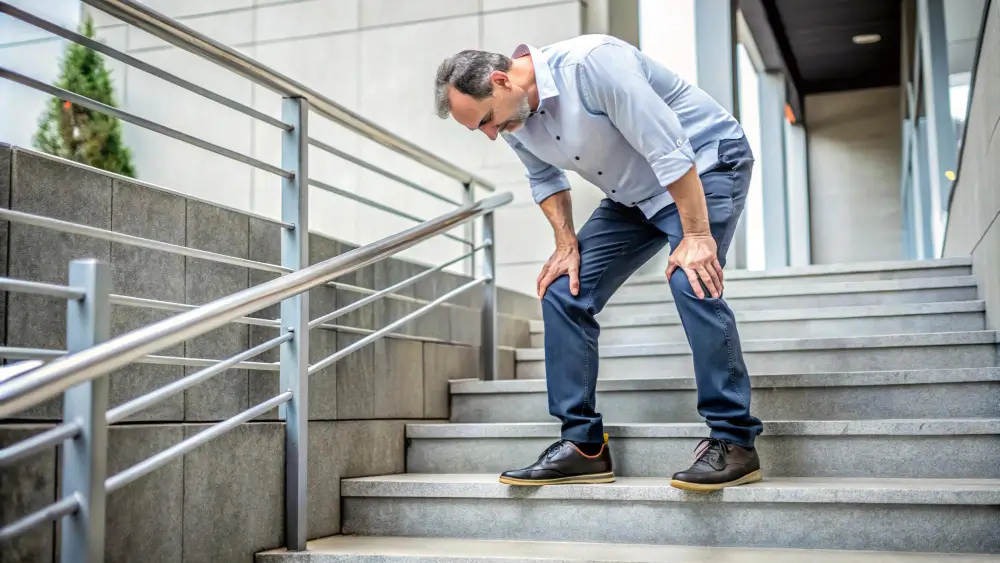
Difficulty in walking or climbing stairs is often brushed off as “just ageing” or temporary body pain. However, persistent discomfort, stiffness, or instability in your legs or joints can be an early warning sign of an underlying orthopaedic condition. Ignoring these symptoms may lead to worsening mobility, chronic pain, and long-term joint damage.
At Apex Hospital, our expert orthopaedic specialists help diagnose and treat joint, bone, and muscle problems at an early stage, ensuring faster recovery and better quality of life.
Understanding Why Walking or Climbing Stairs Becomes Difficult
Walking and stair climbing involve coordinated movement of the hips, knees, ankles, muscles, and spine. When any of these structures are affected, even simple movements can become painful or challenging.
Common Reasons Behind Difficulty in Walking or Climbing Stairs
- Knee or hip joint degeneration
- Muscle weakness or imbalance
- Joint inflammation or swelling
- Cartilage wear and tear
- Ligament or meniscus injury
- Nerve compression or spine issues
- Previous injury or trauma
- Poor posture or obesity
These symptoms may appear gradually or suddenly and should never be ignored if they persist.
Early Warning Signs You Should Not Ignore
1. Pain While Walking or Using Stairs
Pain in the knees, hips, or lower back during movement is one of the most common early signs of an orthopaedic problem. It may worsen after prolonged walking or climbing stairs.
2. Stiffness in Joints
Morning stiffness or difficulty getting up from a sitting position may indicate arthritis or joint degeneration.
3. Swelling Around Joints
Persistent swelling in the knee, ankle, or hip can be a sign of inflammation, injury, or fluid accumulation.
4. Clicking or Grinding Sounds
Hearing or feeling grinding, popping, or clicking while moving your joints could suggest cartilage damage or joint wear.
5. Weakness or Instability
If your knee feels like it may “give way” while walking or climbing stairs, it may point to ligament damage or muscle weakness.
6. Reduced Range of Motion
Difficulty bending or straightening the knee or hip completely is a common sign of joint disorders.
When Should You See an Orthopaedic Specialist?
You should consult an orthopaedic specialist if:
- Pain lasts more than a few days
- Walking or climbing stairs becomes difficult
- Pain increases with activity
- Swelling or stiffness does not improve
- You have difficulty maintaining balance
- Pain affects your daily routine or sleep
Early diagnosis can help avoid surgery and long-term complications.
Common Orthopaedic Conditions That Cause Walking Difficulty
Osteoarthritis
A degenerative joint condition commonly affects knees and hips, leading to pain, stiffness, and reduced mobility.
Knee Cartilage or Meniscus Injury
Often seen in active individuals or elderly patients, causing pain while walking or bending.
Ligament Injuries
ACL or ligament damage can cause instability and difficulty bearing weight.
Spine-Related Problems
Slipped disc or nerve compression can cause pain radiating to the legs, affecting walking.
Muscle Weakness or Imbalance
Age-related muscle loss or inactivity can make movements difficult and unsafe.
How Apex Hospital Helps You Regain Mobility
At Apex Hospital, we provide comprehensive orthopaedic care with advanced diagnostic and treatment facilities.
Our Orthopaedic Services Include:
- Detailed clinical evaluation
- Digital X-rays
- Non-surgical pain management
- Physiotherapy and rehabilitation
- Arthritis management
- Joint replacement treatments (Robotic knee replacement, computer navigation and conventional)
- Minimally invasive and surgical options (if required)
- Key hole (Arthroscopic) ligament / meniscus repair
Our experienced orthopaedic specialists focus on treating the root cause rather than just the symptoms, ensuring long-term relief and improved mobility.
Why Choose Apex Hospital for Orthopaedic Care?
- Experienced orthopaedic specialists
- Advanced diagnostic facilities
- Personalised treatment plans
- Modern physiotherapy support
- Patient-friendly care approach
- Affordable and transparent treatment
We aim to help patients return to an active, pain-free life as early as possible.
Frequently Asked Questions (FAQs)
Q1. Is difficulty in climbing stairs a sign of arthritis?
Yes, difficulty while climbing stairs is often an early symptom of knee or hip arthritis, especially if accompanied by pain or stiffness.
Q2. When should I see an orthopaedic doctor for leg pain?
If your pain lasts more than a few days, worsens with movement, or affects your daily activities, you should consult an orthopaedic specialist.
Q3. Can walking difficulty be treated without surgery?
Yes. Many conditions can be treated with medication, physiotherapy, lifestyle changes, and non-surgical treatments if diagnosed early.
Q4. What tests are needed to diagnose walking problems?
Your doctor may recommend X-rays, MRI scans, blood tests, or physical assessments, depending on the symptoms.
Q5. Does Apex Hospital provide physiotherapy for joint pain?
Yes, Apex Hospital offers structured physiotherapy and rehabilitation programs to improve mobility and reduce pain.
Book Your Orthopaedic Consultation Today
If walking or climbing stairs has become painful or uncomfortable, don’t ignore the signs. Early treatment can prevent long-term damage and help you stay active.
📍 Visit Apex Hospital today
📞 Book an appointment with our orthopaedic specialist
🏥 Get expert care for joint pain, mobility issues, and orthopaedic conditions
Take the first step towards pain-free movement today!
Author By: Dr. Saurabh Talekar