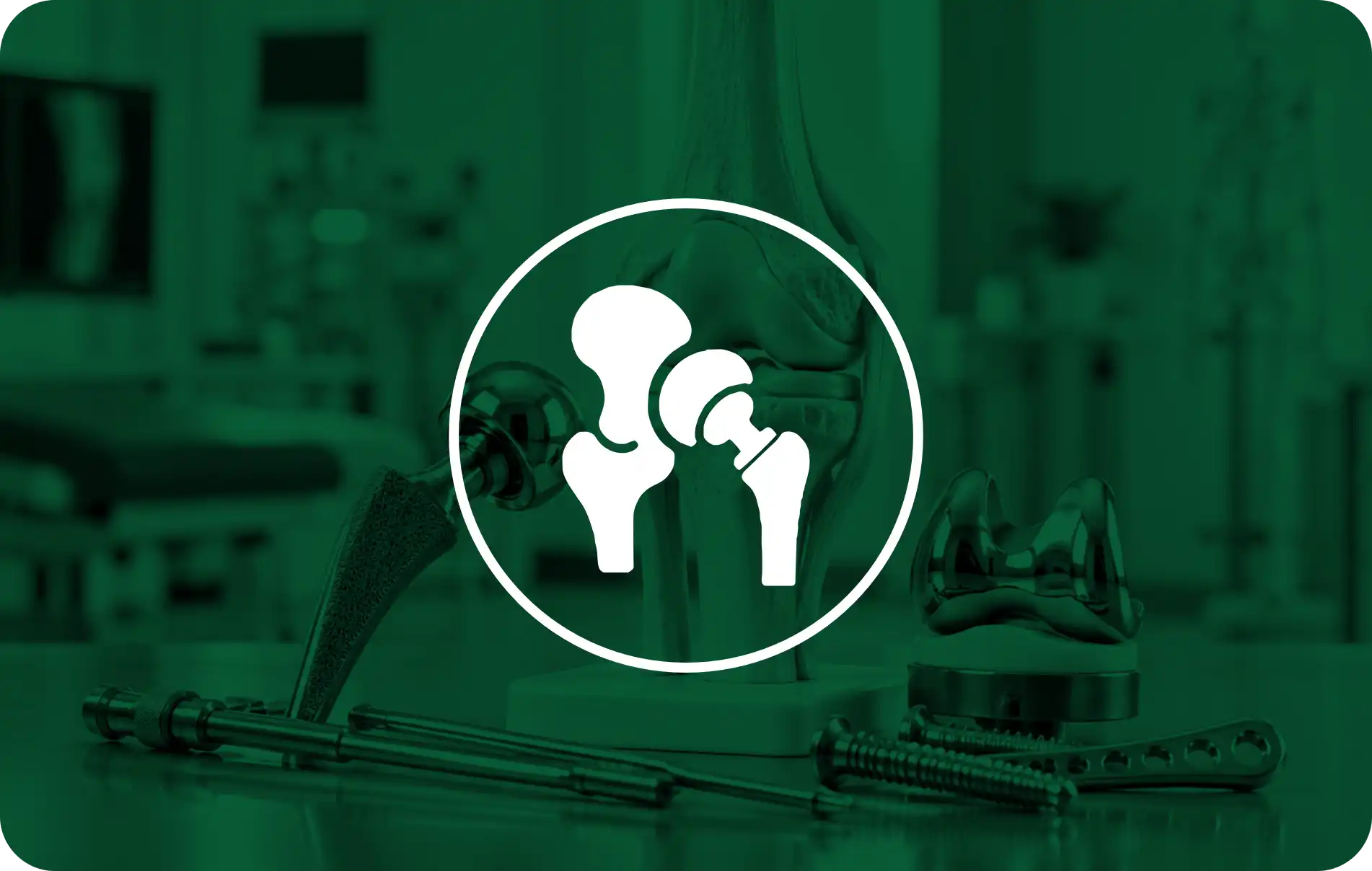
Total hip replacement addresses severe hip joint damage from osteoarthritis, avascular necrosis or traumatic injury conditions where pain has reached the point of restricting walking, getting out of a chair, turning in bed and managing basic daily routines despite conservative management.
At Apex, the procedure removes the deteriorated femoral head and the damaged acetabular socket, replacing them with a metal stem, ball component and a biocompatible cup. Implant type, material and fixation method cemented, uncemented or hybrid are selected based on the patient's age, bone quality and activity demands rather than a fixed protocol. Procedures are performed in dedicated operation theatres with laminar flow ventilation. Three full-time consultants are available at any time, covering both planned procedures and hip fracture emergencies. Post-operative physiotherapy begins with protected weight-bearing and advances progressively based on clinical assessment at each follow-up stage.
How the Procedure Can Help
Hip replacement has a long-established record for pain relief and mobility restoration in end-stage hip disease. At Apex, implant selection is individualised. Patients with different bone quality and activity profiles receive components suited to their specific anatomy rather than a standard-size approach.
Risks and Considerations
The procedure carries a risk of hip dislocation, particularly in the early recovery period before surrounding muscles stabilise the joint. Minor leg length discrepancy may occur and is assessed during surgical planning. Implant wear over time may eventually require revision surgery, and younger patients with higher activity demands require specific pre-operative discussion about realistic implant lifespan. Risks include infection, blood clots, nerve injury and the possibility of further surgery, addressed individually before the procedure.