Jun 29, 2026 | By Admin
An Oncologist Explains: Why Early Cancer Detection Matters - Dr. Rohit Malde
In my years of practice as an oncologist, the one thing that has consistently made the biggest difference in patient outcomes is not the latest treatment protocol or the most advanced surgical technique.
It is the stage at which the patient walks through the door.
Early detection saves lives. This is not just a tagline. It is a clinical reality I see every single day.
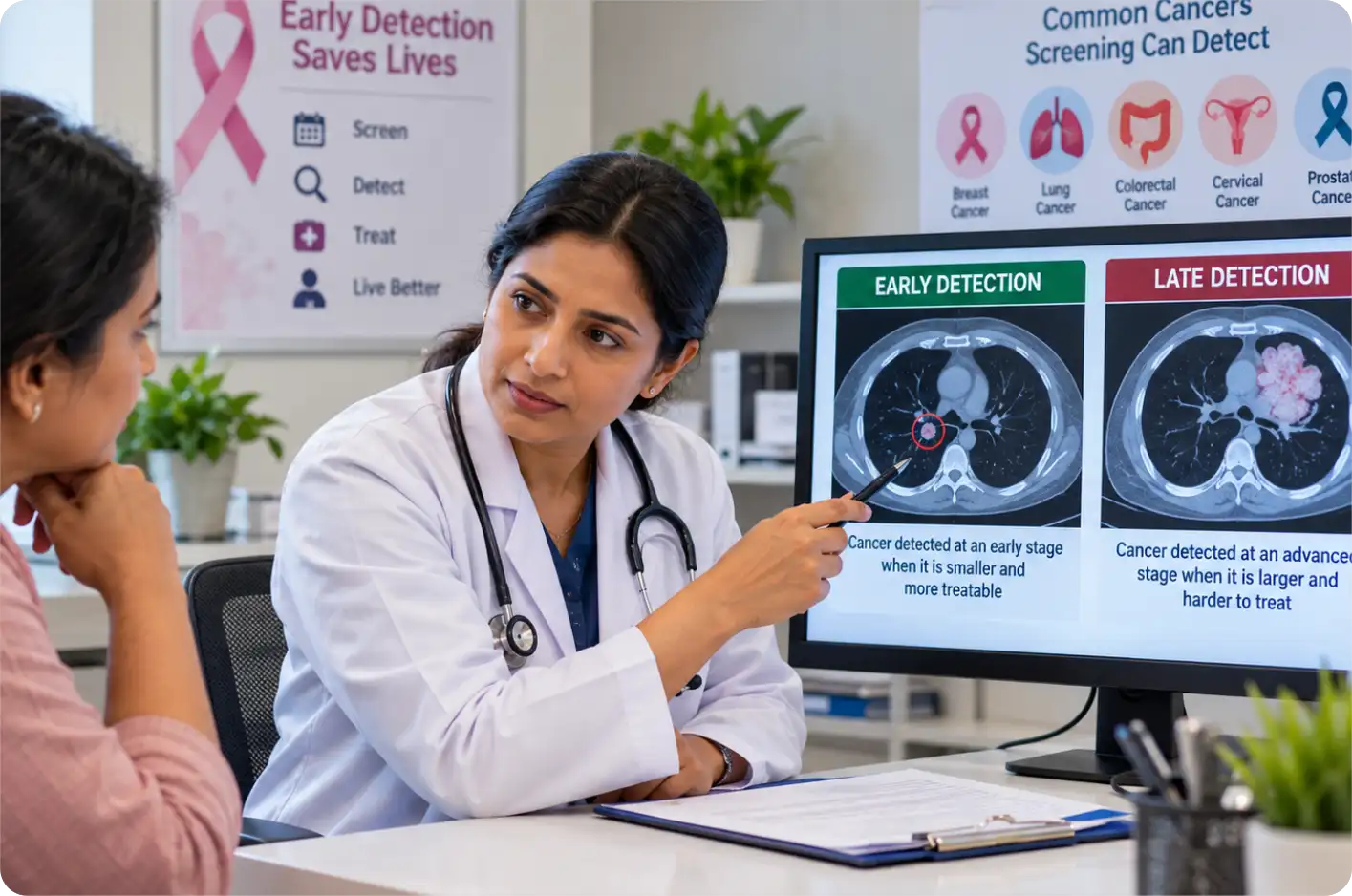
Cancer detected at Stage 1 or Stage 2, when it is still localised and has not spread to lymph nodes or distant organs, gives us significantly better treatment options and much higher survival rates.
By contrast, when cancer is detected at Stage 3 or Stage 4, treatment becomes more complex, more intensive, and outcomes are far less predictable.
The biology of cancer is straightforward in this one respect: the earlier we catch it, the more options we have.
From what I see in practice, there are a few consistent reasons:
Cervical Cancer
Colorectal Cancer
Oral Cancer
Lung Cancer
As an oncologist, I would rather see a hundred patients for routine screening and find nothing than see one patient arrive too late.
The conversation we dread the most, telling someone their cancer is now difficult to treat, is often a conversation that early detection could have prevented.
If you have been experiencing unexplained symptoms or belong to a high-risk group, consult our Oncology Department for a comprehensive evaluation and appropriate cancer screening. Early action is always the right action.
Early cancer detection means finding cancer before it spreads or before symptoms become severe. When cancer is diagnosed at an early stage, doctors often have more treatment options, treatment may be less complex, and the chances of better outcomes can improve.
In this blog, Dr Rohit Malde explains why early cancer detection matters, which symptoms should not be ignored, and who should consider proactive cancer screening. Book a Cancer Screening Consultation.
